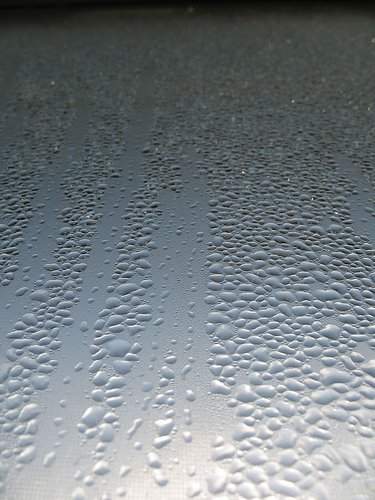
Every winter I repeatedly why ask new energy efficient Windows have condensation you. I have several articles on window condensation, winter window condensation problems, window condensation – part II and more on winter window condensation written, but I thought it was worth that review issues, because it seems today to be so common in newer homes.
Window condensation is due in large part because of how your House is built and not really a result of incorrect Windows. Every year, the houses are built better haze, barriers and overall improved air with improved insulation, better infiltration."However, this led houses very"tight".""Tight" houses are great for us to reduce, how much energy that it takes to heat and cool you however makes it much harder to remove water laden air and contaminated air it help.
The number one reason that you see is condensation on your Windows because you have a high amount of humidity (moisture) in the air. Humidity (water vapor in the air) is a measure of how much moisture is in the air. We produce water vapor in all kinds of ways.We create all water vapor water vapor, when we breathe and produce all Schwitzen.Pflanzen and animals in our homes. On top of that, we create an enormous amount of water vapor from showers, cooking, washing, cleaning and washing the dishes.
Condensation is the process where water vapor (gaseous state) comes in contact with a cool interface (such as a window) and converted back order for condensation on a Windows form that temperature of glass must be at or below the dew point of air touching the liquid state of Wassers.In be glass. So when the dew point is in your home 60 F and the glass temperature hits 50 F then look condensation on the window. Even with large new energy-efficient Windows, the glass temperature slightly lower than the dew point can be caused condensation on Windows.
Older houses seem not so great to have a problem with window condensation. The reason this is true, is because draftier are much older houses. Air leakage helps the home "breathe" and allow excess moisture, to leave the country, and it reduces the dew point. However, older houses typically have window, the less efficient energy and therefore have colder glass, more is prone to condensation problems due to colder temperatures in glass.
If you have condensation problems in your home then I suggest relative humidity start by testing in your home. Measurement of relative humidity in your home is actually pretty easy. Everything you need to do is a hygrometer, Honeywell Wireless Thermo-Hygrometer, buy the humidity measures. Also a dehumidifier in conjunction with good ventilation can use you to reduce the moisture in your home.
Ideally you should make sure that your home is about 40% relative humidity.If home is higher than you really need that, your exhaust systems to bewerten.Die recommends Home Ventilating Institute (HVI) at least 8 air changes per hour for 15 air per hour for kitchens and bathrooms.To calculate the cubic feet of room and compare it with the CFM rating on your exhaust fan.This will tell you how long the exhaust fan run to the recommended ventilation to erreichen.Ich recommend you install an electronic timer on your exhaust fans.In this way can the corresponding time and reach the necessary air exchanges. If you are looking for a new bathroom exhaust fan I recommend the Panasonic WhisperFit low profile fan ventilation - 17 Watt [model FV05VF2], I've used this in both my houses and it is the quietest on the market.
The condensation problems should stop when you exhaust the moisture from your home correctly. understanding what causes condensation save you will stop time and Geld.So window produces the blame and solve the problem, by controlling the humidity.
Go to buy any of the dehumidifier's to Lowe's, thermostats and bathroom exhaust fans. check out the following link for a Lowes coupon.


No comments:
Post a Comment